Logbook
Raw dev logs, daily progress, and behind-the-scenes of building things.

Today I continued shaping the Space Explorer Kit, this time focusing on the planet cards: little pages filled with fun facts, curiosity prompts, and tiny scavenger-hunt style items.
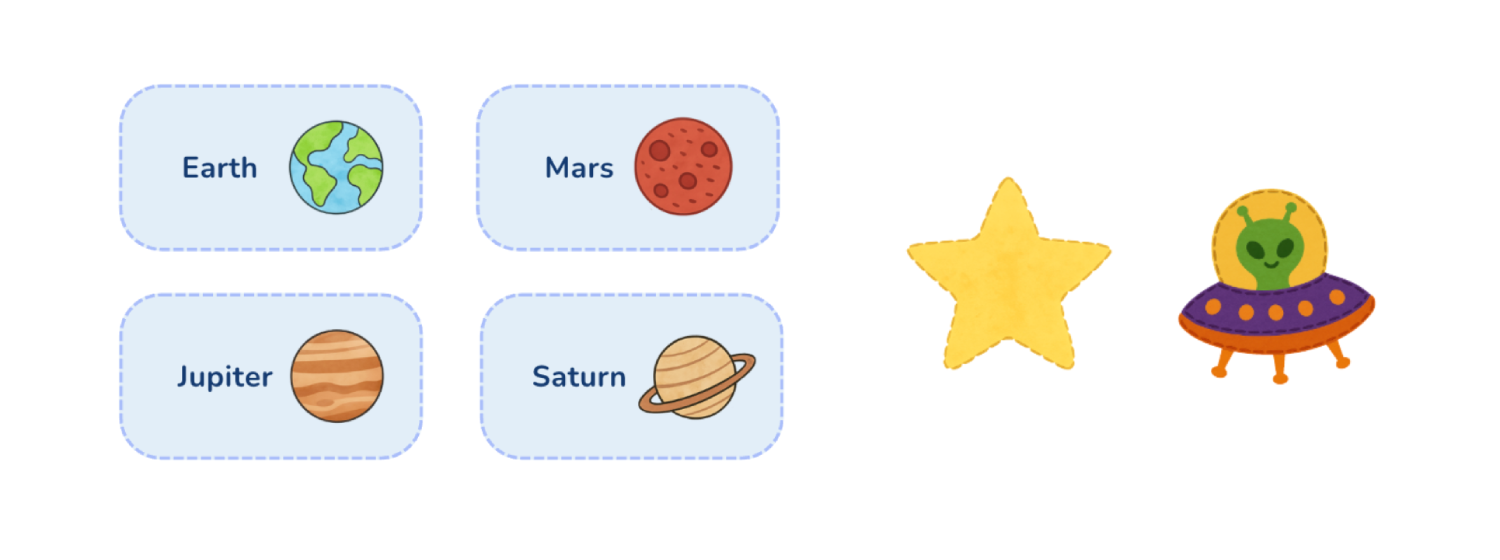
Adding small details from my inner child, imagining how a kid would react, trying to make each card feel playful and a bit magical…
It’s just a small piece of the full kit, but every new page makes the whole thing feel more alive.
A slow, steady build and I genuinely look forward to continuing tomorrow.
Today is the first real design day for Kit of Happiness and it officially begins with the Space Explorer Kit!
I finished the main cover design and created the first batch of themed badges: Space Explorer, Space Commander, Astronaut...
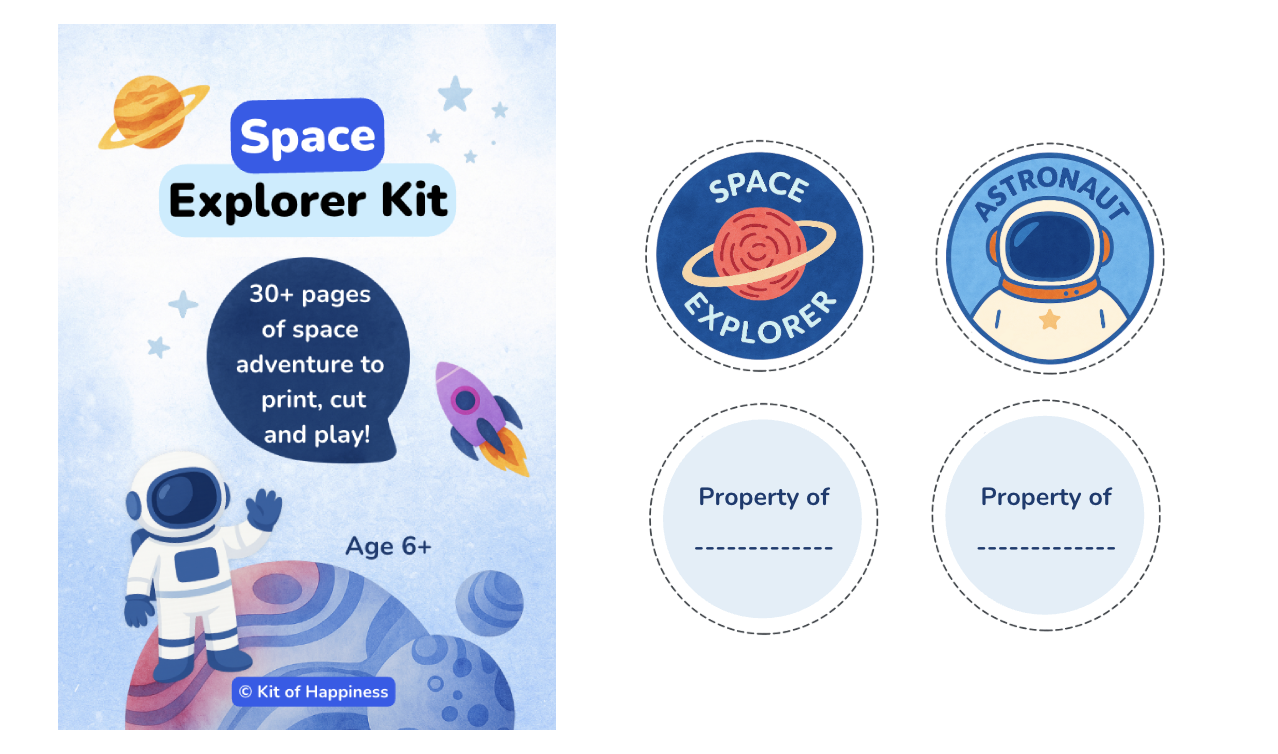
Seven pages are already done, and I’m planning a full 30+ page experience kit, along with a separate party edition 🎉 later on.
I use Canva to bring the whole PDF kit together, probably my all-time favorite design tool. It’s one of those rare products that genuinely deserves its Pro subscription.
It feels so refreshing to design something playful again to think in colors, textures, and imagination rather than screens and data.
Today marks 20 consecutive days of showing up on oneweek.dev 🎉
To celebrate that small milestone, I focused on a bit of infrastructure work, adding pagination (?page=x) to the logs section, updating the sitemap.xml, and re-submitting it to Google Search Console.
Since I didn’t want each paginated view indexed separately, I kept it minimal, just enough for proper SEO crawling while keeping URLs clean.
Then, I used a small Google Indexing API script I had written earlier to automate submitting recent logs directly to Google whenever needed.
It’s simple, local, and gets the job done quickly. Here’s the Node.js script if you want to try it too:
const { google } = require("googleapis");
const fs = require("fs");

// Load client secrets
const credentials = JSON.parse(fs.readFileSync("credentials.json"));

// Read URLs from file
const urlsFilePath = "urls.txt"; // Path to your file
const sitemapUrls = fs
  .readFileSync(urlsFilePath, "utf8")
  .split("\n")
  .filter(Boolean);

async function authenticate() {
  const auth = new google.auth.GoogleAuth({
    credentials: {
      client_email: credentials.client_email,
      private_key: credentials.private_key,
    },
    scopes: ["https://www.googleapis.com/auth/indexing"],
  });

  return await auth.getClient();
}

async function notifyGoogle(auth, url) {
  const indexing = google.indexing({
    version: "v3",
    auth,
  });

  try {
    const res = await indexing.urlNotifications.publish({
      requestBody: {
        url: url,
        type: "URL_UPDATED",
      },
    });
    console.log(`✅ Successfully notified Google about URL: ${url}`);
  } catch (error) {
    console.error(`❌ Error notifying Google about URL: ${url}`, error);
  }
}

async function main() {
  const auth = await authenticate();
  for (const url of sitemapUrls) {
    await notifyGoogle(auth, url);
  }
}

main().catch(console.error);
urls.txt
https://oneweek.dev/log/2025-11-08-bringing-ambassador-program-for-genuine-growth
https://oneweek.dev/log/2025-11-07-adding-app-store-data-and-platform-breakdown
https://oneweek.dev/log/2025-11-06-publishing-the-advertise-page-on-our-finance-app
credentials.json
{ "type": "service_account", "project_id": "xxx", "private_key_id": "xxxx", "private_key": "-----BEGIN PRIVATE KEY-----xxxx-----END PRIVATE KEY-----\n", "client_email": "xxxx", "client_id": "xxxx", "auth_uri": "https://accounts.google.com/o/oauth2/auth", "token_uri": "https://oauth2.googleapis.com/token", "auth_provider_x509_cert_url": "https://www.googleapis.com/oauth2/v1/certs", "client_x509_cert_url": "xxxx", "universe_domain": "googleapis.com" }
It seems like it worked perfectly, all recent logs are now indexed!
A small but satisfying improvement to make oneweek.dev more discoverable while keeping things fully manual for now and maker-friendly.
After getting the first response from our initial outreach for potential partnerships, today we focused on creating a detailed pitch deck, filled with deeper audience insights and custom ideas for the first potential partner.
It turned out really well.
We’ve always believed that the personal touches make the difference. That’s why instead of sending generic offers, we’re preparing custom partnership decks for each brand we genuinely admire, the ones that align with our mission and resonate with our audience too.
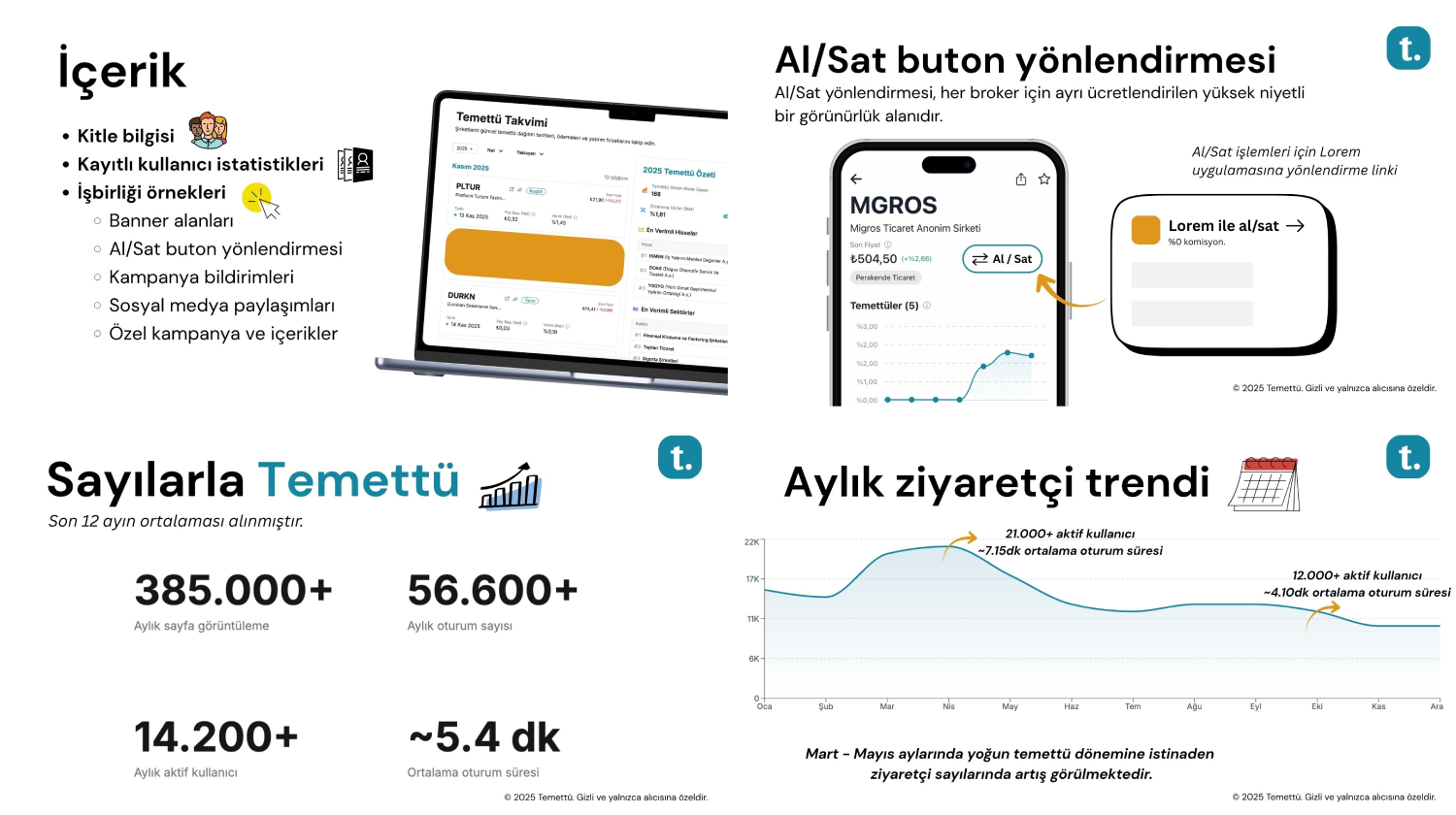
This approach feels much more authentic, and even though it takes more time, it’s the kind of groundwork that builds meaningful collaborations rather than one-time deals.
It feels like a small but important step toward sustainable growth for Temettü.
Today I built a new internal analytics dashboard to better understand our user base; not individual data, but anonymous patterns that help us shape both product decisions and marketing partnerships.
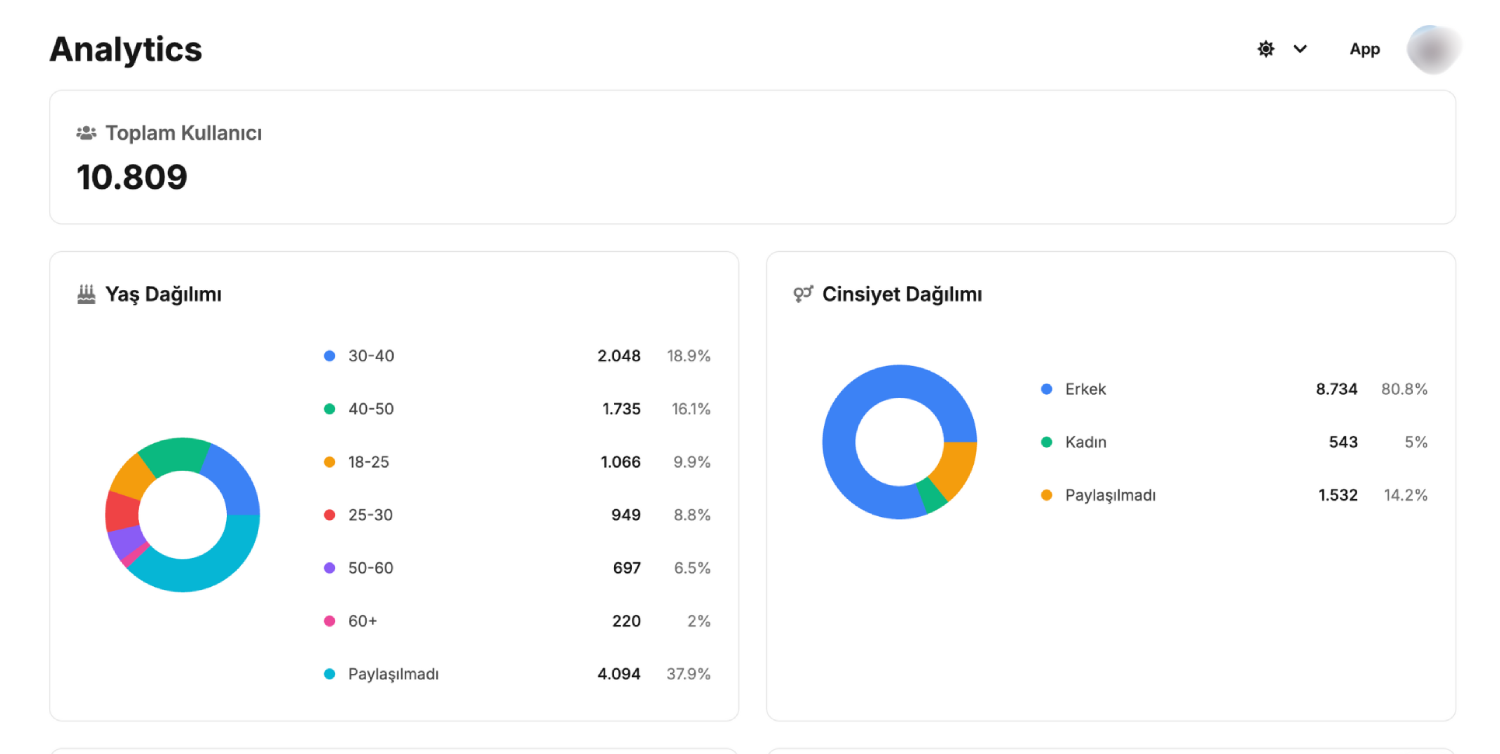
It gave us some really interesting insights about who’s using Temettü and how they engage:
-
Top age groups:
- 30–40 (18.9%)
- 40-50 (16.1%)
- 18-25 (9.9%)
- Not shared (37.9%)
-
Gender:
- 80.8% male,
- 5% female,
- 14.2% not shared
-
Top interests:
- Stocks (96.5%)
- Gold (49.5%)
- Forex (32.5%)
-
Top occupations:
- Engineer / Developer (16.6%)
- Public Worker (10.9%)
- Entrepreneur (9.5%)
-
Notifications enabled: 43.6%
- Promotions & education notifications enabled: 99.6%
It’s clear that our community is deeply financially literate, highly engaged, and mostly composed of professionals actively managing their portfolios.
This data will be valuable not only for future feature prioritization but also for building meaningful brand partnerships that align with what our users already care about.
Today it was a long day at work and I found a quite space in the evening only for some reflections: AI is definitely coming for our jobs, what to do next.
It’s about the shift we’re all witnessing on how AI is slowly replacing not just labor but thinking, and what that means for makers, builders, and anyone trying to stay creative in a world of automation.
I wrote it as both a reflection and a reminder: that fear doesn’t help, action does.
That the best way to stay relevant is to keep building, experimenting, and co-creating with these new tools instead of resisting them.
It’s a longer piece, exploring:
- how work is changing,
- how to adapt and leverage AI creatively,
- why human curiosity, emotion, and storytelling will always matter most.
Today I wrote and published a new blog post titled “5 digital products that bring back soul to the internet.”
It’s the first entry in the new Get Inspired series, something I’ve been wanting to do for a while: highlighting creative projects that remind me what the internet used to feel like.
The post explores five products that combine design, emotion, and technology in thoughtful, human ways:
- Postcrossing — reconnecting the world through handwritten postcards.
- Slowly App — bringing back the art of letter-writing with digital pen pals.
- Poolsuite — an endless summer of nostalgia and playful design.
- FutureMe — sending letters to your future self, timeless and personal.
- Neal.fun — curiosity and creativity through small, joyful experiments.
Writing this piece felt like a breath of fresh air, a reminder that technology doesn’t have to be cold or purely functional.
Sometimes it can simply make us feel something again.
I want this series to continue to discover and celebrate digital products that carry warmth, curiosity, and intention in their design.
If you know a project that made you pause or smile, send it my way. Maybe it’ll appear in the next issue.
Today I spent some time exploring a new hobby project: Kit of Happiness, a small creative experiment born from my love of themed kits and crafting.
Originally, it came to my mind a while ago for physical gift boxes, tangible kits filled with items that bring joy and curiosity as I find myself curating gift kits whenever I consider a gift to someone. I bought the domain (of course) and connected it to Shopify.
But producing and storing physical goods would mean setting up a new company and logistics operation, which isn’t possible right now.
Then, after a conversation with a friend who's interested in digital products, why not turn it into something printable for the starting point, something people can enjoy and print right at home?
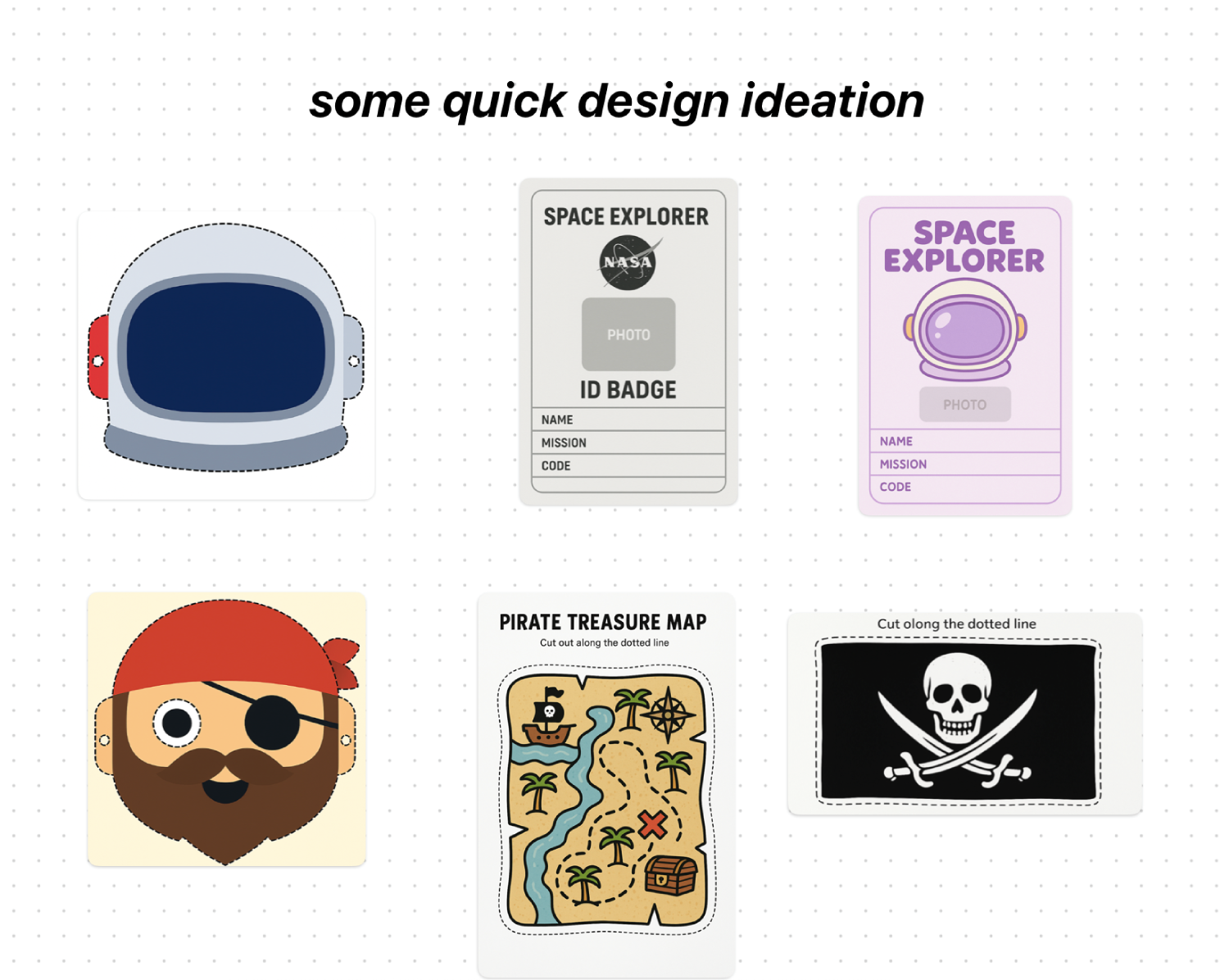
From physical boxes to printable worlds
I’ve always loved creating things by hand.
As a child, I made my own toys from cardboard, little market stands, miniature houses, even a space shuttle once. That same hands-on playfulness is what I want to capture again through Kit of Happiness.
Each kit could become a themed printable world. Something children (or even adults later) can craft, decorate, and play with.
Some of the early themes I noted:
- 🏴☠️ Pirate Adventure — treasure maps, ship flags, puzzles, and printable pirate certificates.
- 🕯️ Time Traveler — passports through eras, collectible artifacts, time challenge cards.
- 👩🚀 Space Explorer — astronaut IDs, mission badges, galaxy puzzles, and party decors.
Each theme could include a printable ID, certificate, puzzles, party decors, and a small game set; a full creative experience designed for kids’ parties or playful afternoons at home.
A small creative break
This project is more of a creative playground, a lighter space between more technical projects, a reminder of why I love building in the first place.
Today I just sketched a few ideas, mocked up early visuals, and thought about how to design the kits in printable layers.
The concept feels warm and nostalgic, almost like reconnecting with my childhood creativity in a new form.
One day it will grow into physical boxes again as I really want to experiment it as well but for now, I’ll keep experimenting with digital kits that spark imagination and happiness, one printable world at a time.
Today was a communication-heavy day, but in a meaningful way.
We started drafting the foundation of what could become one of the most genuine parts of Temettü’s growth; the ambassador program.
The backstory
We actually hadn’t planned on creating an ambassador program. But over time, we’ve noticed a few users who have been with Temettü from the very beginning, people who not only use the app regularly but also write thoughtful feedback, share feature ideas, and genuinely care about improving the product.

During the beta phase, we were already giving free Pro access to early users for testing purposes. Then one of those early users reached out again with detailed feedback, he shared how Temettü's portfolio experience is really differing from the rest and how much he valued it, but also that the Pro pricing felt a bit high for him.
Even though we cannot change our pricing due to monthly expenses, that message stayed with us.
It reminded us that the product’s real value lies in the community of users who help shape it, not just the features we build.
So today, we decided to turn that realization into something more intentional, a draft version of an ambassador program, designed to give back to those who bring genuine value to the ecosystem.
The initial idea is simple:
- Free Pro accounts for engaged users who provide regular feedback or create meaningful content
- Authentic sharing, not sponsorship; users who naturally talk about the app and dividend investing because they believe in it
- Mutual benefit, we grow together, and their voices shape how the product evolves
Reflection
Some ideas emerge from strategy, others from genuine connection.
The ambassador concept was one of those a small reminder that the best communities aren’t built by marketing plans, but by people who care deeply enough to help you make something better.
This felt like one of those quiet but important steps forward today and it genuinely felt good to finally arrive at this idea.
Today I added App Store and platform distribution data to the Temettü advertise page. It now shows a more complete snapshot of our audience, combining web traffic with app downloads and platform engagement.
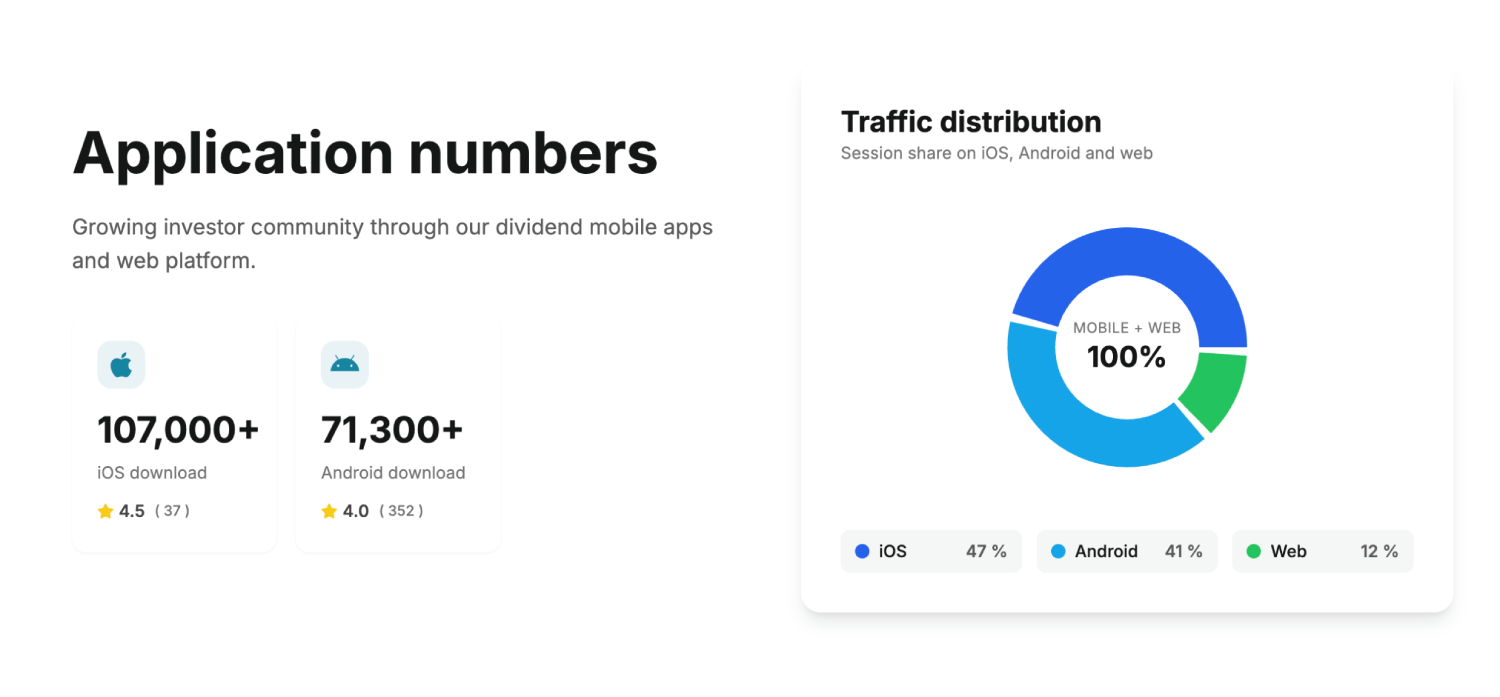
We currently have:
- 107,000+ iOS downloads (⭐ 4.5 average rating, 37 reviews)
- 71,300+ Android downloads (⭐ 4.0 average rating, 352 reviews)
- And a growing web audience, still smaller but steadily increasing as we optimize SEO and expand our content.
Context on the data
These numbers have accumulated over the past five years except iOS reviews, carried through an older codebase with many problems where we were not able to put much focus on app improvement.
iOS app had a chance to reset rating with the new major version earlier this year, while Android still reflects some of the earlier data and legacy reviews.
Soon, we’ll start working on gathering fresh reviews and ratings, especially after the next round of UI updates and new features.
The new traffic breakdown highlights platform shares clearly:
- iOS — 47%
- Android — 41%
- Web — 12%
Even though mobile remains dominant, the web version we introduced last year is starting to build its own steady audience, especially among users who prefer quick research without downloading the app.
The goal with this section was to give potential partners and sponsors a more transparent overview of our ecosystem, how users interact with Temettü across platforms and where the main engagement happens.
No logs yet
First dev log coming soon...